Souvlaki.
Few ingredients. A long journey.
What is souvlaki?
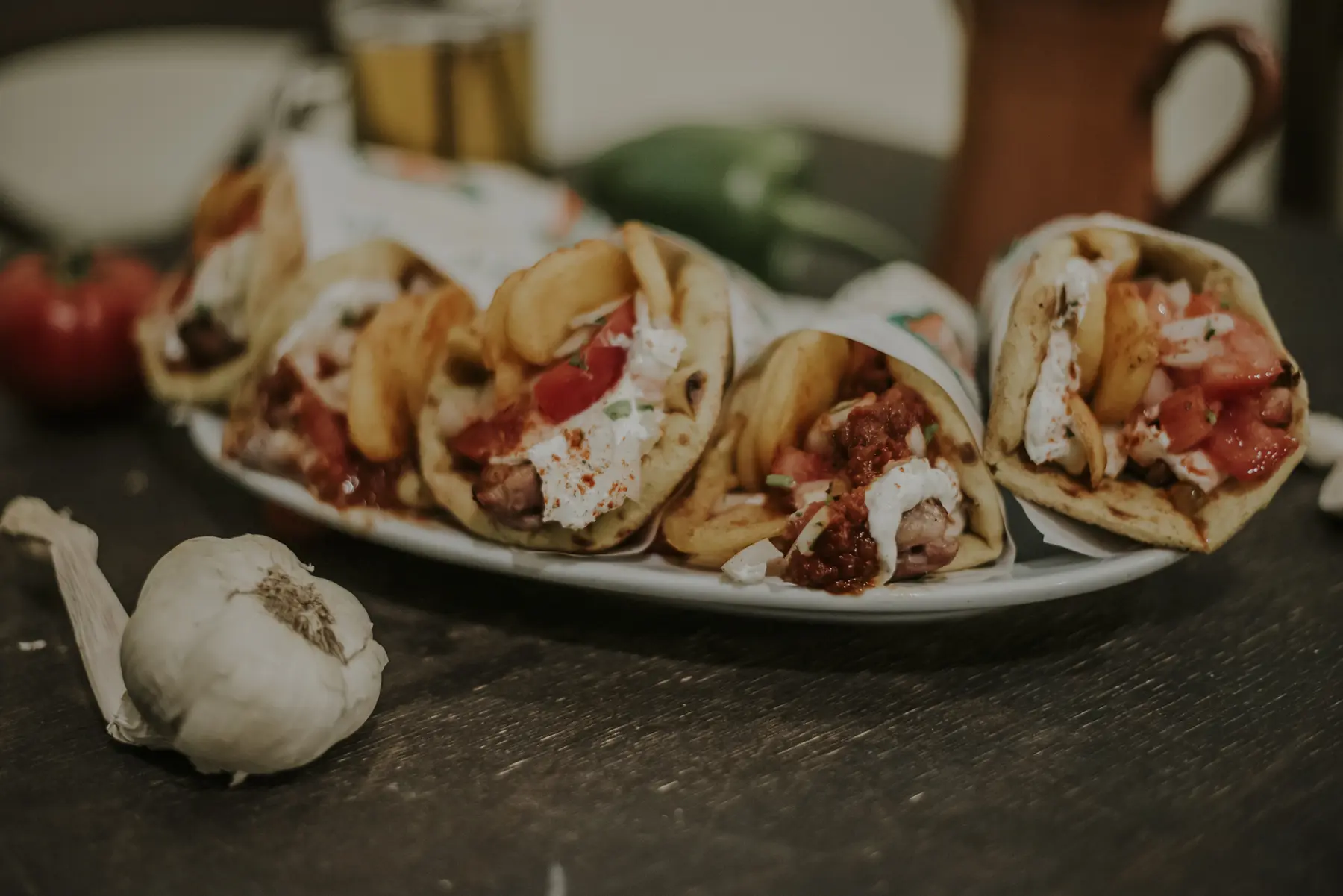
Souvlaki is one of Greece’s most recognisable foods: small pieces of meat are grilled on a skewer and served on their own, in pita, or as a plate. It is commonly accompanied by pita, vegetables, sauces and fries. In Greece and Cyprus, pork is the most common choice, with chicken also widely popular, while versions using other meats can also be found.
Etymology
The word souvlaki is the diminutive of souvla (“spit”) and is etymologically linked to the Latin subula. In Athens and much of southern Greece, kalamaki commonly refers to meat threaded onto a small wooden skewer, while souvlaki can be used more broadly for the category or for a pita-wrapped version. Usage varies from place to place.
History
Cooking meat on spits has deep roots in Greek food history. Athenaeus, in the Deipnosophistae, refers to Hegesippus’ Opsartytikos, which described kandaulos: a preparation combining roasted meat, pita, cheese and dill, served with broth.
It was not modern souvlaki, but it offers an interesting example of how far back combinations of grilled meat, bread and accompaniments can be traced in Greek food culture.
Text adapted from Wikipedia — “Souvlaki” · CC BY-SA 4.0 · changes have been made.
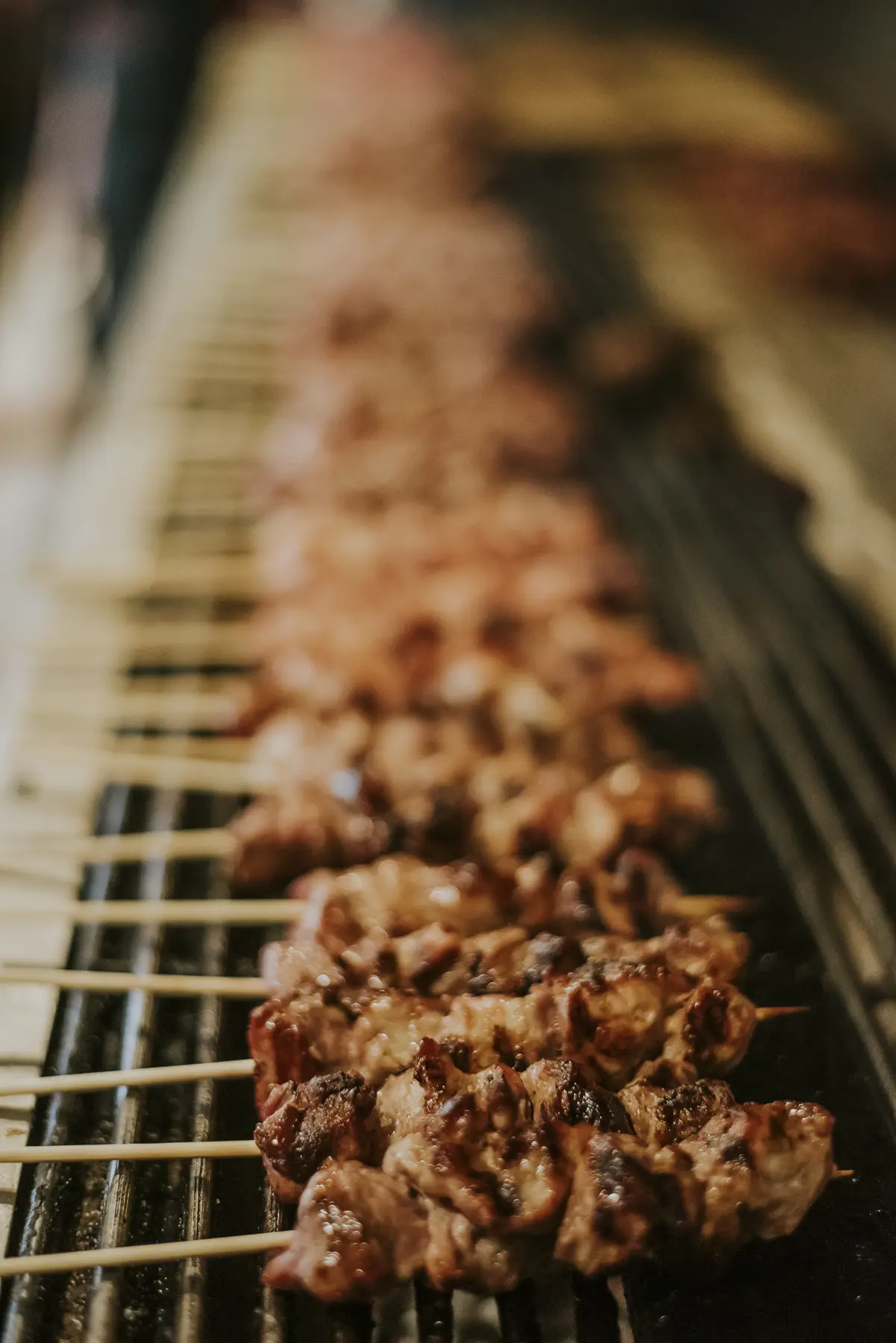
From the spit to modern souvlaki.
Cooking meat on spits has ancient precedents, but modern Greek souvlaki developed much later. In 1850, Gustave Flaubert described Greeks grilling pieces of meat on small spits in the Boeotian countryside. The modern fast-food form became widespread in the post-war decades.
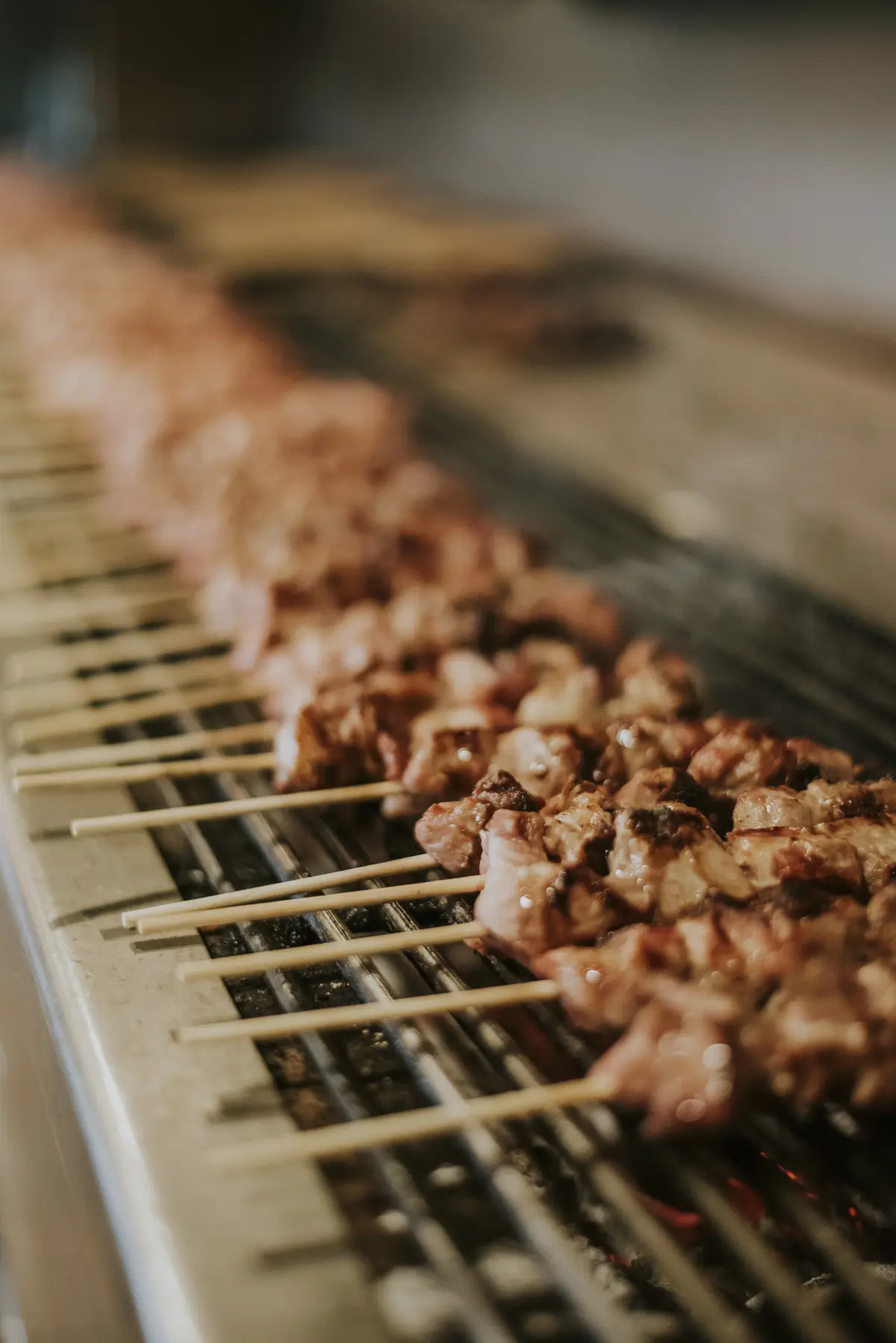
Kalamaki over charcoal.
The printed menu includes handmade pork, chicken-thigh and milk-fed veal skewers. Pitas are grilled over charcoal without oil.
View menu →